Mary Ann
Of Human BondageMary Ann is the Carey family’s maid and a formative presence in Philip Carey’s childhood at the vicarage. The daughter of a fisherman, she has worked there since she was eighteen and intends to remain; for Philip, her kitchen and her stories open a warmer, more imaginative world than the formal household allows. Her relationship with him culminates in an uncomplicated gesture of care, while her later dismissal marks the loss of one of his oldest domestic ties.
Identity and Place in the Household
Mary Ann is thirty-five when Philip arrives at the vicarage, where she has been employed since the age of eighteen. It is her first position, and she has no intention of leaving, though she holds the possibility of marriage over her timid employers as a way of asserting leverage. Her parents live in a small house off Harbour Street, and she visits them on her evenings out. Her working life is woven into the vicarage’s daily economy: the household carefully limits its fires because coal is expensive, and the maid dislikes having fires throughout the house. In winter the Careys generally keep to the dining room so that one fire will suffice; the large hall stove is lit only in very bad weather or when the Vicar has a cold.
The household’s routines also depend on Mary Ann’s labor and preferences. After tea she resents having to prepare more food, leaving Mrs. Carey to help clear away before a cold supper. Bathing arrangements are shaped by the difficulty of heating water and by Mary Ann’s own schedule: she takes her bath on Monday, when she likes to begin the week clean. These practical details place her not at the edge of domestic life but within its daily organization, even as the Carey household retains authority over her employment.
Bond with Philip
Mary Ann becomes one of Philip’s first companions in the vicarage. He has always lived the solitary life of an only child, and the move does not make that loneliness fundamentally new; nevertheless, her company gives him a place where he feels more at ease. He carries his toys into the kitchen whenever he can, and his aunt does not object, since she prefers his mess there to disorder elsewhere. In contrast to the dining room, where Philip may fidget under his uncle’s gaze, the kitchen is a refuge for play and laughter.
Her stories of the sea stir Philip’s imagination. The harbour lanes take on a romance for him through the tales she tells, and he even asks whether he may go home with her. His aunt refuses for fear he might catch something, while his uncle objects that bad company corrupts good manners. The denied visit reveals a boundary between the vicarage child and Mary Ann’s working-class family world; it also shows how her storytelling brings that world within Philip’s reach, even when he is not allowed to enter it.
Care, Discipline, and Affection
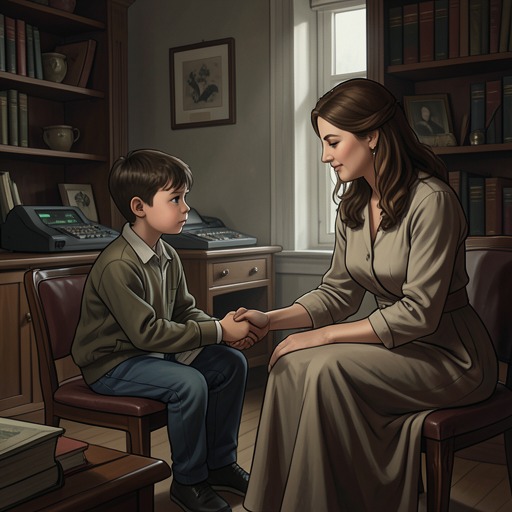
Mary Ann’s care is practical rather than sentimental. At first Philip resists being undressed by her, but he eventually establishes the right to dress and undress himself. One evening, after he has walked to church with his uncle and is exhausted, he does not resist her help. She tucks him into bed and kisses him; the gesture marks a quiet turning point, and Philip begins to love her. The affection grows from repeated domestic contact and a moment of physical gentleness, not from any grand declaration.
Her place in Philip’s memory is sustained by small acts of attention. Even after he has grown older and left the vicarage, she never forgets his birthday and sends him a little gift, described as absurd but touching. When he learns she is to leave, his surprise reflects how deeply he has counted on her continued presence. To him she has been part of the household for as long as he can remember, and her loyalty has outlasted his childhood.
Dismissal and Narrative Significance
Mr. Carey decides to give Mary Ann notice because he does not think it appropriate to have a single woman in the house and considers her lately troublesome for taking too much on herself. Philip objects that she must be over forty, but his uncle confirms the decision. The explanation exposes the household’s power over a long-serving employee: decades of service and Philip’s affection do not prevent the Vicar from ending her employment when he judges it convenient.
Mary Ann’s story gives the novel’s domestic world a counterpoint to its more formal structures of religion, class, and authority. The Careys’ habits are measured in fires, meals, baths, and household rules; Mary Ann helps maintain those routines, yet also offers Philip companionship that his aunt’s awkward affection cannot provide. Her eventual departure makes that distinction visible. For Philip, she is not merely a servant but an early source of security, imagination, and everyday tenderness.